

Tags:AgricultureUPSC
Source: PIB
Subject: Indian Economy: Poverty Reduction, Agriculture Growth and Rural Development|Target exams: UPSC
Key points for Prelims: PM-KISAN Samman Nidhi, Lakhpati Didi, Self-help groups, ICAR, Watershed development under the Department of Land Resources, World Bank poverty estimates
Mains syllabus mapping
- General Studies Paper 2: Government policies and interventions for development in sectors such as agriculture, poverty and rural development; welfare schemes for vulnerable sections; role of ministries in convergence of programmes
- General Studies Paper 3: Agriculture: growth, productivity, agricultural research (ICAR) and technology; inclusive growth and poverty alleviation
Key facts for one-day exams
- The reported decadal agriculture growth rate was 4.45%.
- Pradhan Mantri Awaas Yojana - Gramin enabled construction of 3.99 crore permanent houses.
- Pradhan Mantri Gram Sadak Yojana created 7.99 lakh km of all-weather rural roads.
- Fish production was reported at 19.78 million tonnes.
- Krishi Vigyan Kendras' digital outreach reportedly reaches five crore farmers annually.
India poverty reduction and agriculture growth: why in the news?
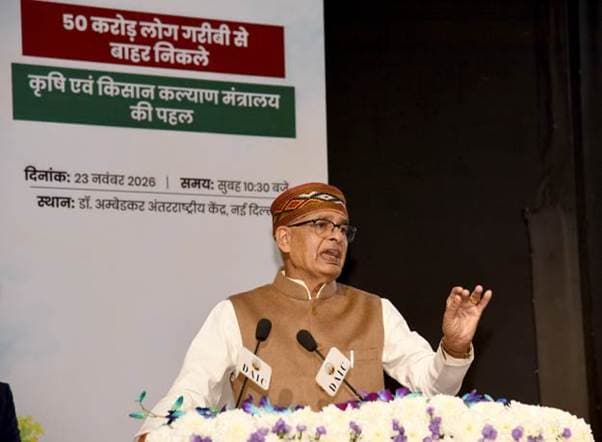
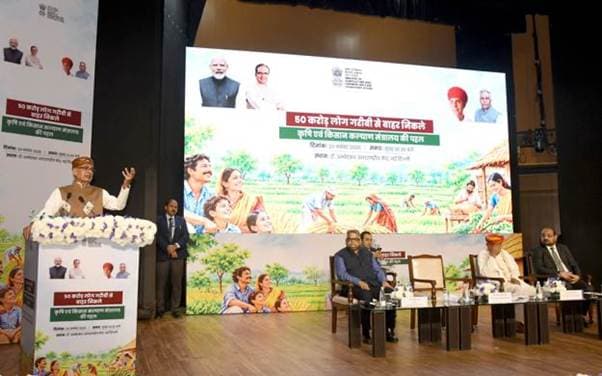
A joint workshop of the Agriculture and Rural Development ministries, chaired by Union Minister Shivraj Singh Chouhan, reviewed India’s poverty reduction progress, citing a decline in extreme poverty from 27.1% to 2.6% and a historic 4.45% decadal agriculture growth rate, making the government’s strategy and data a current affairs focus.
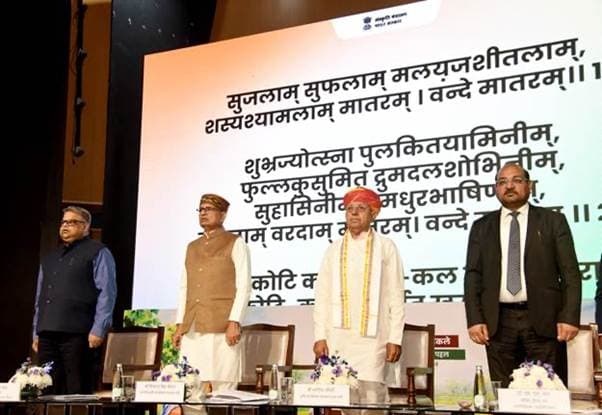
A joint workshop of the Ministries of Agriculture and Rural Development on their role in poverty eradication concluded in New Delhi on November 23, 2026, under the chairmanship of Union Minister Shivraj Singh Chouhan. The one-day workshop at the Dr Ambedkar International Centre brought together secretaries and staff from four departments, Agriculture and Farmers’ Welfare, Rural Development, Land Resources, and Agricultural Research and Education, to review achievements and discuss the strategy ahead. Union Ministers of State Bhagirath Choudhary and Kamlesh Paswan also participated.
Citing a World Bank report, Chouhan said India’s extreme poverty rate had declined from 27.1% to 2.6% and that nearly 500 million people had moved out of poverty. He described the decadal agriculture growth rate as a historic 4.45%, surpassing the 3-3.5% range recorded during the Green Revolution era. The minister reported that more than ₹4.66 lakh crore in direct assistance had been provided under the PM-KISAN Samman Nidhi, and that foodgrain production stood at 376.56 million tonnes and horticulture production at 386.91 million tonnes. He also noted that ICAR research had delivered an economic return of ₹13.85 for every rupee invested.
Chouhan said the government’s two priorities were to prevent those who had risen above the poverty line from falling back and to bring the remaining 2.6-2.7% of the population out of poverty. He left the stage to sit among employees and seek their suggestions, telling them they were not merely witnesses to the development journey but its drivers. The workshop also reviewed rural development outcomes: more than 10 crore women were linked to self-help groups, 3.76 crore had become Lakhpati Didis, 3.99 crore permanent rural houses had been built, and 7.99 lakh km of all-weather rural roads constructed. Watershed interventions under the Department of Land Resources covered 3.40 crore hectares, directly benefiting 61.15 lakh farmers.
Which law guarantees rural employment in India?
The Mahatma Gandhi National Rural Employment Guarantee Act was enacted in 2005. The Act was extended to all rural districts in 2008.
What did the workshop review in agriculture and rural development?
The workshop reviewed achievements across four departments. In agriculture, it highlighted the decadal growth rate of 4.45%, foodgrain production of 376.56 million tonnes, and horticulture production of 386.91 million tonnes. Since 2014, 3,436 crop varieties were released, 93% of them climate-resilient. Krishi Vigyan Kendras’ digital outreach reportedly reaches five crore farmers annually. In rural development, the review reported 3.99 crore permanent rural houses under the Pradhan Mantri Awas Yojana and 7.99 lakh km of all-weather roads under the Pradhan Mantri Gram Sadak Yojana. Watershed work under the Pradhan Mantri Krishi Sinchayee Yojana covered 3.40 crore hectares, with reported average annual income growth of up to 70% for beneficiary farmers.
What are the stated priorities and next steps?
Chouhan said the government’s two commitments were to prevent those who had moved above the poverty line from falling back and to rapidly bring the remaining 2.6-2.7% of the population out of poverty. The workshop sought employee suggestions to improve existing schemes. The review also identified expanding the presence of Indian agricultural products in global markets through free trade agreements as an objective. Development targets for 2029, 2030-31 and 2047 were mentioned as milestones to meet.
Reported research returns per rupee invested
| Research area | Economic return |
|---|---|
| Agricultural research and education | ₹13.85 |
| Animal husbandry research | ₹20.81 |
Key terms
- Extreme poverty:
- Extreme poverty refers to living below a specified international poverty line, measured using consumption or income.
- Self-help group:
- A self-help group is a small group whose members cooperate, commonly through savings and access to credit.
- Watershed development:
- Watershed development involves managing land and water resources within an area that drains to a common point.
- Climate-resilient crop variety:
- A climate-resilient crop variety is developed to better withstand climatic stresses such as drought or heat.
India poverty reduction and agriculture growth: why it matters for exams
Exams: UPSC
Syllabus: Agriculture: Agricultural growth and research; Economy: Poverty and rural development
Common mistake: Examiners may present ₹20.81 as the return on agricultural research and education: its reported return was ₹13.85 per rupee, while ₹20.81 relates to animal husbandry research.
Mains practice questions
Question 1(GS-3 | 250 words | 15 marks)
The decline of extreme poverty in India from 27.1% to 2.6% is often credited to agricultural growth and rural welfare schemes. Critically examine how agricultural growth and rural development interventions have contributed to poverty reduction, and what challenges remain in securing the gains of those who have crossed the poverty line.
Answer outline
- Introduction: Open by contrasting the sharp fall in extreme poverty from 27.1% to 2.6% with the fragility of gains for households just above the poverty line, as stressed in the workshop chaired by Shivraj Singh Chouhan.
- Body:
- Agricultural growth: a decadal rate of 4.45% and rising foodgrain and horticulture output, linking farm productivity to rural incomes and employment
- Direct transfers and income support such as PM-KISAN, with more than ₹4.66 lakh crore disbursed, cushioning farm households
- Rural development interventions: self-help groups covering over 10 crore women, 3.76 crore Lakhpati Didis, rural housing and all-weather roads improving access and livelihoods
- Watershed development covering 3.40 crore hectares, improving water security and rain-fed farm productivity
- Challenges: vulnerability of near-poor households to shocks such as climate variability, income volatility, and the need for diversified non-farm livelihoods
- Conclusion: Agricultural and rural interventions have driven poverty reduction, but sustaining it requires shifting from income support towards resilience, diversification and secure livelihoods for those who have just escaped poverty.
Question 2(GS-3 | 150 words | 10 marks)
Agricultural research is often described as a high-return investment for national development. Discuss the role of ICAR and climate-resilient crop varieties in improving farm productivity and farmer welfare, and suggest measures to ensure that the benefits of agricultural research reach small and marginal farmers.
Answer outline
- Introduction: Begin by noting the reported return of ₹13.85 for every rupee invested in ICAR research and the release of climate-resilient varieties, showing research as a driver of agricultural growth.
- Body:
- Role of ICAR in developing high-yielding and climate-resilient varieties, with 93% of 3,436 varieties released since 2014 being climate-resilient
- Link to productivity gains, food security and the decadal growth rate of 4.45%
- Extension and last-mile delivery through Krishi Vigyan Kendras and state agricultural universities to reach small farmers
- Measures: farmer-centric demonstration, seed availability, digital advisory services, and participatory research with farmers
- Conclusion: Strong research linked to effective extension can convert scientific gains into inclusive farm income growth, making the fruits of research available to small and marginal farmers.
Stuck? Get it in one tap
Poverty reduction depends on stable livelihoods and access to essential services. Agricultural research, farmer support, rural housing and roads address different parts of that challenge. Watershed development means managing land and water resources in an area that drains to a common point.
- Agriculture: Agricultural growth and research
- Economy: Poverty and rural development
Related concepts: Extreme poverty, Self-help group, Watershed development, Climate-resilient crop variety
Practice questions
Pick an answer, then read the explanation.
- Q1Easy
Which department implements the watershed development component of Pradhan Mantri Krishi Sinchayee Yojana?
Explanation: The watershed development component operates under the Department of Land Resources. The other departments cover agriculture and farmers' welfare, rural development, and agricultural research and education respectively.
- Q2Hard
Consider the following statements about India's rural development and agricultural research indicators:
- 1. More than 10 crore women were connected with self-help groups under Deendayal Antyodaya Yojana - National Rural Livelihoods Mission.
- 2. Animal husbandry research generated a reported economic return of ₹13.85 per rupee invested.
- 3. Since 2014, 93% of the 3,436 crop varieties released were climate-resilient.
Which of the statements given above is/are correct?
Explanation: Statements 1 and 3 are correct: the review reported over 10 crore women in self-help groups and 93% climate-resilient varieties among 3,436 releases. Statement 2 is incorrect because the reported animal husbandry research return was ₹20.81 per rupee; ₹13.85 was for agricultural research and education.
- Q3Medium
What decadal agriculture growth rate was reported in the 2026 joint rural poverty review?
Explanation: The reported decadal agriculture growth rate was 4.45%. The review contrasted it with a stated 3-3.5% range during the Green Revolution era.
- Q4Medium
What is the principal purpose of the watershed development component of Pradhan Mantri Krishi Sinchayee Yojana?
Explanation: The watershed component supports water conservation and land improvement, contributing to agricultural livelihoods. Rural housing, direct farmer assistance and rural roads are associated with other programmes reviewed.
Frequently asked questions
1. What extreme poverty rate was cited in India's 2026 rural development review?
The review cited a decline from 27.1% to 2.6%.
2. How much assistance was reported under Pradhan Mantri Kisan Samman Nidhi?
More than ₹4.66 lakh crore in direct assistance was reported.
3. How many farmers directly benefited from the watershed development component of Pradhan Mantri Krishi Sinchayee Yojana?
The reported number was 61.15 lakh farmers.
4. How many women were reported as Lakhpati Didis?
The rural development review reported 3.76 crore Lakhpati Didis.
All sources
- Original23 November 2026 · Read story



