

HPV vaccination prevents infection by high-risk Human papillomavirus types that cause almost all cervical cancers. Cervical cancer is the second most common cancer among women in India, so the government added the vaccine to its immunisation programme to prevent it in girls before they become sexually active.PIB
The vaccine is given at age 14 because the WHO's primary target group is girls aged 9 to 14 years, before sexual debut. Vaccination is the most cost-effective public health measure against cervical cancer, but screening is still needed after vaccination.
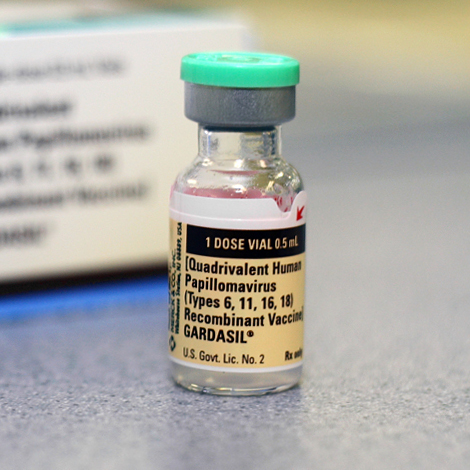
Key facts
| Launch date | 28 February 2026, launched by PM Narendra Modi at Ajmer, RajasthanPIB |
|---|---|
| Vaccine used | Gardasil-4 (quadrivalent), protecting against HPV types 6, 11, 16 and 18PIB |
| Cost | Free at government health facilitiesPIB |
| Campaign duration | 90-day intensive drivePIB |
| Digital platform | U-WIN (registration); eVIN (vaccine stock and logistics)PIB |
| National coverage | 79.51% as of 14 October 2026 (U-WIN report, per story)Indian Express |
| Maharashtra coverage | 9% of its target of 9.84 lakh girls as of 15 November 2026; ranked 32nd of 36 states and UTs (per story)Indian Express |
Key features and how it works
- Vaccine is given free at government health facilities that have a functional Cold Chain Point, a medical officer for AEFI management, and internet connectivity. Sessions usually run 9:00 AM to 2:00 PM and may be held on weekends and public holidays.PIB
- Girls may self-register on U-WIN, be pre-registered by a health worker, or walk in for on-site registration. The left index finger is marked after vaccination during the three-month campaign.PIB
- Each site is linked to the nearest 24x7 government health facility for immediate medical support.PIB
- The vaccine is procured through a transparent mechanism in partnership with GAVI, the Vaccine Alliance. GAVI provided US$250 million under a three-year partnership (February 2023) that also covered introducing HPV and Typhoid Conjugate Vaccine into routine immunisation.PIB
- After the campaign, the vaccine stays available on routine immunisation days.PIB
Eligibility and rules
- Eligible: girls aged 14, and girls who turn 15 within 90 days of the launch, under the intensive campaign.PIB
- Excluded: girls with moderate or severe illness until full recovery, known yeast allergy or prior allergic reaction to any vaccine, pregnant girls, and girls previously vaccinated with any HPV vaccine. The target is girls aged 14, with girls who turn 15 within 90 days of launch also eligible under the intensive campaign.PIB
Static GK
- U-WIN: the digital platform used for HPV vaccine registration in this programme.PIB
- eVIN manages and monitors all vaccine stocks and logistics for the programme.PIB
- GAVI, the Vaccine Alliance, is a public-private partnership of governments, WHO, UNICEF, the World Bank, the vaccine industry, civil society and the Gates Foundation. HPV vaccine procurement is undertaken in partnership with GAVI.PIB
- Cervical Cancer Elimination Day of Action: 17 November; it marks the day in 2020 when WHO launched the global strategy to accelerate elimination of cervical cancer as a public health problem.
- WHO target: 90% of girls fully vaccinated with HPV vaccine by age 15.
Achievements
- India launched what PIB describes as a free nationwide HPV vaccination programme for about 1.15 crore girls, joining over 160 countries that have HPV vaccination in national immunisation schedules.PIB
- Nationwide coverage reached 79.51% as of 14 October 2026, with 91.82 lakh girls vaccinated and 146 adverse events following immunisation reported across the country.Indian Express
- Gujarat, Uttar Pradesh, Andhra Pradesh, Madhya Pradesh and Mizoram had covered 100% of their targets.Indian Express
Challenges
- Misinformation, including online claims linking the HPV vaccine to infertility, has created hesitancy among parents.Indian Express
- Coverage varies widely between states and districts: Maharashtra stood at 9% and Mumbai at 2%, while Wardha reached 25%. Such regional gaps weaken equal protection.Indian Express
- Sessions with low turnout can waste effort; Maharashtra held more than 2.14 lakh sessions but vaccinated only 86,855 girls, which shows that sessions alone do not drive uptake.Indian Express
Way forward
- Outcome monitoring by district through U-WIN, so that low-coverage districts are identified and supported early.
- Community awareness and handholding through health workers to counter misinformation and encourage parents to bring their daughters.
- Convergence with schools and existing immunisation days so that eligible girls are reached without relying only on health facility visits.
Timeline
17 November 2026
State figures show Maharashtra at 9% and Mumbai at 2% of HPV vaccine targets as of 15 November 2026, ranking Maharashtra 32nd of 36 states and UTs; national coverage stood at 79.51% as of 14 October 2026.
Read the story28 February 2026
PM Narendra Modi launched the nationwide HPV vaccination programme at Ajmer, Rajasthan; States and UTs held simultaneous launch events.PIB
February 2023
GAVI and the Government of India established a three-year partnership with US$250 million funding, including introduction of HPV vaccine into the national schedule.PIB
2006
HPV vaccines first became available globally.
Every new story on this subject is added here automatically.
Frequently asked questions
When was the national HPV vaccination programme launched in India?
The programme was launched on 28 February 2026 by PM Narendra Modi at Ajmer, Rajasthan.PIB
Who is eligible for the free HPV vaccine under this campaign?
Girls aged 14 are eligible, as are girls who turn 15 within 90 days of launch under the intensive campaign. Girls previously vaccinated with any HPV vaccine are excluded.PIB
Which HPV types does the vaccine used in India protect against?
The vaccine used is Gardasil-4, which protects against HPV types 6, 11, 16 and 18.PIB
Which platform is used to register girls for the HPV vaccine?
Girls register on the U-WIN digital platform, or are pre-registered by a health worker, or register on-site at walk-in.PIB
GS paper mapping
- GS-2Health: government policies and interventions for health; immunisation programmes
- GS-2Governance: centre-state coordination in public health delivery
- GS-3Science and technology: vaccines and indigenous vaccine development (Cervavac)
- GS-2International relations: India and GAVI partnership
Sources
Every fact on this page was checked against these pages.
