

Source: Indian Express
Subject: Health and Social Sector: Public Health Programmes, Vaccination and Cervical Cancer Prevention
Key points for Prelims: Human papillomavirus (HPV), Gardasil-4, U-WIN platform, Universal Immunisation Programme, Cervical cancer, Adverse Events Following Immunisation (AEFI)
Mains syllabus mapping
- General Studies Paper 2: Health: Government policies and interventions for development in health sector; issues relating to public health and vaccination
- General Studies Paper 2: Governance: Centre-State relations in implementing national health campaigns; role of state health departments
- General Studies Paper 3: Science and Technology: Developments in vaccines and health technology; use of digital platforms such as U-WIN
Key facts for one-day exams
- India’s free HPV vaccination campaign began on 28 February 2026.
- The national campaign targets approximately 1.15 crore girls aged 14.
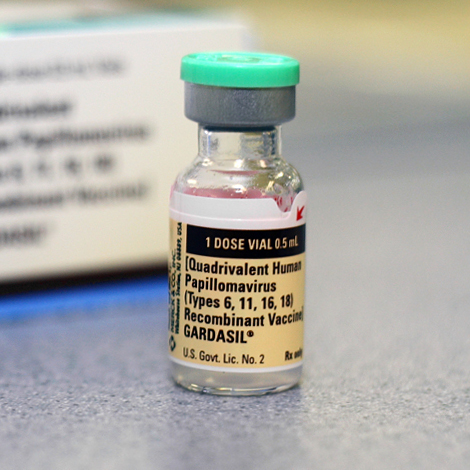
- Maharashtra uses Gardasil-4 against HPV types 6, 11, 16 and 18.
- Wardha recorded 25% HPV vaccination coverage.
- World Cervical Cancer Elimination Day is observed on 17 November.
HPV vaccination campaign coverage: why in the news?
State health department figures released on November 15, 2026, ahead of World Cervical Cancer Elimination Day on November 17, show that Maharashtra and Mumbai have low HPV vaccination coverage despite a national campaign launched in February 2026.
Maharashtra has vaccinated only 9% of its target of 9.84 lakh 14-year-old girls against cervical cancer, with Mumbai recording just 2% coverage, according to state health department figures released on November 15, 2026. The state ranked 32nd among 36 states and Union Territories in the national HPV vaccination campaign report on the U-WIN platform as of October 14, which put national coverage at 79.51%. Gujarat, Uttar Pradesh, Andhra Pradesh, Madhya Pradesh and Mizoram had covered 100% of their targets.
The state conducted more than 2.14 lakh vaccination sessions but administered the vaccine to only 86,855 girls. On November 15, a Sunday, just one girl in Nanded received the HPV vaccine despite 10 sessions being held. Dr Sandeep Sangale, Additional Director, Health Services, State Family Welfare Bureau, acknowledged the shortfall and said the department was trying to encourage more parents to get their daughters vaccinated. He noted that no side effects had been reported in any state. The U-WIN report of October 14 recorded 146 adverse events following immunisation across the country against 91.82 lakh girls vaccinated, three of which were in Maharashtra.
District-wise figures show wide disparities: Wardha recorded the highest coverage at 25%, followed by Parbhani and Dhule at 23% each, and Sangli and Gondia at 19% each. Mumbai and Chhatrapati Sambhajinagar vaccinated just 2% of their targets, while Pune recorded 4% and Thane 8%. Misinformation, including online claims linking the HPV vaccine to infertility, has contributed to hesitancy among parents. The free national campaign, launched on February 28, 2026, aims to cover around 1.15 crore 14-year-old girls. Maharashtra is administering Gardasil-4, which protects against HPV types 6, 11, 16 and 18.
Key features and how it works
- Vaccine is given free at government health facilities that have a functional Cold Chain Point, a medical officer for AEFI management, and internet connectivity. Sessions usually run 9:00 AM to 2:00 PM and may be held on weekends and public holidays.PIB
- Girls may self-register on U-WIN, be pre-registered by a health worker, or walk in for on-site registration. The left index finger is marked after vaccination during the three-month campaign.PIB
- Each site is linked to the nearest 24x7 government health facility for immediate medical support.PIB
- The vaccine is procured through a transparent mechanism in partnership with GAVI, the Vaccine Alliance. GAVI provided US$250 million under a three-year partnership (February 2023) that also covered introducing HPV and Typhoid Conjugate Vaccine into routine immunisation.PIB
- After the campaign, the vaccine stays available on routine immunisation days.PIB
Eligibility and key provisions
- Eligible: girls aged 14, and girls who turn 15 within 90 days of the launch, under the intensive campaign.PIB
- Excluded: girls with moderate or severe illness until full recovery, known yeast allergy or prior allergic reaction to any vaccine, pregnant girls, and girls previously vaccinated with any HPV vaccine. The target is girls aged 14, with girls who turn 15 within 90 days of launch also eligible under the intensive campaign.PIB
Related Static GK and comparison
- U-WIN: the digital platform used for HPV vaccine registration in this programme.PIB
- eVIN manages and monitors all vaccine stocks and logistics for the programme.PIB
- GAVI, the Vaccine Alliance, is a public-private partnership of governments, WHO, UNICEF, the World Bank, the vaccine industry, civil society and the Gates Foundation. HPV vaccine procurement is undertaken in partnership with GAVI.PIB
- Cervical Cancer Elimination Day of Action: 17 November; it marks the day in 2020 when WHO launched the global strategy to accelerate elimination of cervical cancer as a public health problem.
- WHO target: 90% of girls fully vaccinated with HPV vaccine by age 15.
Achievements
- India launched what PIB describes as a free nationwide HPV vaccination programme for about 1.15 crore girls, joining over 160 countries that have HPV vaccination in national immunisation schedules.PIB
- Nationwide coverage reached 79.51% as of 14 October 2026, with 91.82 lakh girls vaccinated and 146 adverse events following immunisation reported across the country.
- Gujarat, Uttar Pradesh, Andhra Pradesh, Madhya Pradesh and Mizoram had covered 100% of their targets.
Challenges
- Misinformation, including online claims linking the HPV vaccine to infertility, has created hesitancy among parents.
- Coverage varies widely between states and districts: Maharashtra stood at 9% and Mumbai at 2%, while Wardha reached 25%. Such regional gaps weaken equal protection.
- Sessions with low turnout can waste effort; Maharashtra held more than 2.14 lakh sessions but vaccinated only 86,855 girls, which shows that sessions alone do not drive uptake.
Way forward
- Outcome monitoring by district through U-WIN, so that low-coverage districts are identified and supported early.
- Community awareness and handholding through health workers to counter misinformation and encourage parents to bring their daughters.
- Convergence with schools and existing immunisation days so that eligible girls are reached without relying only on health facility visits.
HPV vaccination coverage by district
| District | Coverage |
|---|---|
| Wardha | 25% |
| Parbhani and Dhule | 23% each |
| Sangli and Gondia | 19% each |
| Thane | 8% |
| Pune | 4% |
| Mumbai and Chhatrapati Sambhajinagar | 2% each |
Key terms
- Human papillomavirus:
- Human papillomavirus is a group of viruses; persistent infection with certain high-risk types can cause cervical cancer.
- Cervical cancer screening:
- Cervical screening checks for signs of disease or precancerous changes so that further assessment and treatment can be arranged.
- Adverse event following immunisation:
- An adverse event following immunisation is a health event occurring after vaccination; its occurrence alone does not establish that the vaccine caused it.
HPV vaccination campaign coverage: why it matters for exams
Syllabus: Science and Technology: Vaccines and infectious diseases; Society: Public health and preventive care
Common mistake: Examiners may present Maharashtra’s 9.84 lakh health department target as the 14 October U-WIN target; the latter was 9.38 lakh.
Mains practice questions
Question 1(GS-2 | 250 words | 15 marks)
Despite a free national campaign against cervical cancer, Maharashtra and Mumbai have recorded very low HPV vaccination coverage while the national figure stands at 79.51%. Critically examine the factors behind vaccine hesitancy and the gaps in implementation that explain this disparity, and suggest measures to improve coverage.
Answer outline
- Introduction: Open by noting that the national HPV campaign, launched on 28 February 2026 to reach about 1.15 crore 14-year-old girls, has reached 79.51% nationally yet Maharashtra (9%) and Mumbai (2%) lag far behind.
- Body:
- Supply and implementation gaps: many sessions held with very few vaccinations, as in Maharashtra where over 2.14 lakh sessions yielded only 86,855 doses, indicating weak mobilisation and session planning.
- Vaccine hesitancy driven by misinformation, including online claims linking the HPV vaccine to infertility, and the need for counter-messaging through trusted local voices.
- Urban-rural and district variation: Wardha at 25% versus Mumbai at 2% shows that urban outreach, school linkage and parental consent processes need targeted design.
- Safety communication: the U-WIN data of 146 adverse events against 91.82 lakh girls vaccinated, with no serious side effects reported, must be communicated transparently to build trust.
- Institutional coordination between the Centre, state health departments and local bodies, and the use of U-WIN for tracking and reminders.
- Conclusion: Coverage gains will depend on combining evidence-based public communication, school and community engagement and robust tracking, so that a free preventive tool reaches the girls who need it most.
Question 2(GS-3 | 150 words | 10 marks)
Discuss how digital platforms such as U-WIN can strengthen the delivery and monitoring of national immunisation programmes, and evaluate the limits of relying on such technology in addressing public health challenges like HPV vaccine coverage.
Answer outline
- Introduction: Introduce U-WIN as the digital platform that generated the national HPV coverage report (79.51% as of 14 October 2026) and that tracks adverse events, showing the potential of data-driven health governance.
- Body:
- Strengths: real-time tracking of doses, district-wise dashboards that expose gaps such as Mumbai's 2%, and monitoring of adverse events following immunisation.
- Limits: digital data reveals coverage shortfalls but does not by itself address hesitancy, misinformation or weak field delivery, as seen in sessions held with few takers.
- Digital divide and reliance on accurate records, along with the need for grassroots workers and trust to convert information into vaccinations.
- Conclusion: Technology like U-WIN is an effective monitoring tool, but it must be paired with community trust-building and field-level delivery to achieve real coverage gains.
Stuck? Get it in one tap
HPV is a group of viruses, some types of which can cause cervical cancer. The national campaign offers free vaccination to 14-year-old girls, but coverage in Maharashtra remains low. Regular screening helps detect cervical disease early and complements vaccination.
- Science and Technology: Vaccines and infectious diseases
- Society: Public health and preventive care
Related concepts: Human papillomavirus, Cervical cancer screening, Adverse event following immunisation
Practice questions
Pick an answer, then read the explanation.
- Q1Easy
Which virus is targeted by Gardasil-4 in Maharashtra’s cervical cancer prevention campaign?
Explanation: Gardasil-4 targets four types of human papillomavirus: 6, 11, 16 and 18. The other viruses are not the HPV types targeted by this vaccine.
- Q2Hard
Consider the following statements about India’s HPV vaccination campaign:
- 1.The national campaign targets 14-year-old girls.
- 2.Maharashtra administers Gardasil-4 against HPV types 6, 11, 16 and 18.
- 3.Mumbai recorded higher vaccination coverage than Wardha.
Which of the statements given above is/are correct?
Explanation: Statements 1 and 2 are correct: the campaign targets 14-year-old girls, and Gardasil-4 covers the four listed types. Statement 3 is incorrect: Mumbai recorded 2% coverage, compared with Wardha’s 25%.
- Q3Medium
What was national HPV vaccination coverage in the U-WIN report as of 14 October 2026?
Explanation: National coverage was 79.51% on 14 October 2026. The other percentages do not match the recorded national coverage.
- Q4Medium
Why are parental awareness campaigns important for Maharashtra’s HPV vaccination programme?
Explanation: Misinformation, including claims linking HPV vaccination to infertility, contributed to parental hesitancy. Awareness supports uptake but does not replace screening or treatment.
Frequently asked questions
1. Who is targeted by India’s free HPV vaccination campaign?
Approximately 1.15 crore 14-year-old girls are targeted by the campaign launched on 28 February 2026.
2. Which HPV vaccine is Maharashtra administering?
Gardasil-4 is being administered in Maharashtra. It covers HPV types 6, 11, 16 and 18.
3. What was Maharashtra’s HPV vaccination coverage in November 2026?
Coverage was 9% by 15 November 2026, with 86,855 girls vaccinated against the health department’s target of 9.84 lakh.
4. How many cancer screening vans has Maharashtra deployed?
Eight screening and diagnostic vans have been deployed to cover all 36 districts.
All sources
- Original17 November 2026 · Read story



