

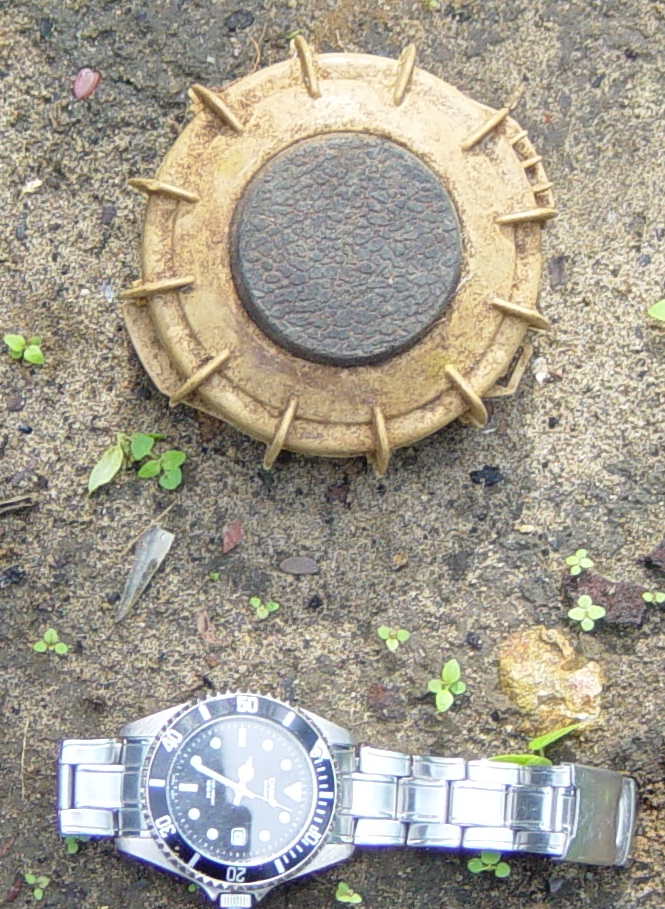
Anti-personnel mines are designed for use against people. Blast mines often aim to injure rather than kill, adding to the burden on enemy medical and logistics systems. Their small size allows large numbers to be laid over wide areas.
The 1997 treaty aims to eliminate anti-personnel landmines worldwide. It is also known as the Ottawa Treaty, the Anti-Personnel Mine Ban Convention, or the Mine Ban Treaty.
The International Campaign to Ban Landmines, a coalition of NGOs formed in 1992, drove the campaign for the ban. The campaign's monitoring arm, Landmine and Cluster Munition Monitor, tracks how states implement the treaty.
Key facts
| Entry into force | 1 March 1999The Hindu |
|---|---|
| States bound | 162 countries bound; 35 outside the treaty (as reported in November 2026)The Hindu |
| Stockpile destruction | Within 4 years of joiningThe Hindu |
| Mine clearance | Within 10 years, in areas the state controlsThe Hindu |
| Adoption and signing | Adopted in Oslo in September 1997; signed by 122 states in Ottawa on 3 December 1997 |
| Nobel recognition | The ICBL and its coordinator Jody Williams jointly received the 1997 Nobel Peace Prize |
| Non-parties | The United States, China, Russia, India and Pakistan are not parties |
Key features and how it works
- States parties must never use anti-personnel mines and must not develop, produce, acquire, stockpile, retain or transfer them.
- States must destroy mines in their stockpiles within four years and clear mined areas in their territory within 10 years.
- In mine-affected countries, states must conduct mine risk education and ensure that survivors, their families and communities receive comprehensive assistance.
- States parties must adopt national implementation measures, such as national legislation, to uphold the treaty in their territory.
- States parties offer assistance to other states parties, such as support for survivors or contributions to clearance programmes.
Static GK
- Convention on Certain Conventional Weapons (CCW): adopted in October 1980 in Geneva by a UN conference; its Protocol II restricts, but does not ban, anti-personnel mines. The Mine Ban Treaty was built as a separate instrument after Protocol II review talks failed.
- International Campaign to Ban Landmines (ICBL): a coalition of NGOs formed in 1992 with its founding coordinator Jody Williams; merged with the Cluster Munition Coalition in 2011 to form the ICBL-CMC; central office in Geneva.
- Landmine and Cluster Munition Monitor: the ICBL-CMC's research and monitoring arm, created in 1998, and the de facto monitoring regime for the Mine Ban Treaty.
- Nobel Peace Prize: the 1997 prize was shared by the ICBL and Jody Williams for their efforts to bring about the Mine Ban Treaty.
Achievements
- The treaty has 162 states bound by it, according to the 28th Landmine Monitor report of November 2026.The Hindu
- The ICBL's work on the treaty won the 1997 Nobel Peace Prize, and the treaty's signature is seen as the campaign's greatest success.
- The ban has set a norm that gives civil society a role in verification, through the Landmine Monitor, which is the first systematic NGO monitoring of a disarmament treaty.
Challenges
- Major past and present manufacturers, including the United States, China and Russia, are not parties, which limits the treaty's reach.
- Landmine and explosive remnants of war casualties in 2025 were the highest since 2020, showing that the ban has not stopped harm from existing mines.The Hindu
- Five states began withdrawal in 2025 (Poland, Lithuania, Latvia, Estonia, Finland), with the Baltic states, Finland and Poland completing it between December 2025 and February 2026, and Ukraine announced an intent to withdraw.
- The treaty does not guarantee protection from mines laid by non-state armed groups.
Way forward
- Outcome monitoring through civil society verification, such as the Landmine Monitor, can track whether states meet the four-year and ten-year deadlines.
- Universalisation efforts aimed at non-party states, and pressure on non-state armed groups to respect the ban norm, can widen coverage.
- Convergence of mine clearance, mine risk education and survivor assistance in affected countries can reduce the casualty burden as the treaty's obligations are implemented.
Timeline
25 November 2026
The 28th annual Landmine Monitor report shows 2025 landmine and explosive remnants of war casualties at their highest since 2020, as the treaty faces its first-ever withdrawals.
Read the storyFebruary 2026
Poland completes its withdrawal, the last of the five states to do so.
2025
Poland, Lithuania, Latvia, Estonia and Finland formally begin the procedure to withdraw.
1 March 1999
The treaty enters into force.The Hindu
3 December 1997
The treaty is signed by 122 states in Ottawa, Canada.
September 1997
The Mine Ban Treaty is adopted in Oslo, Norway.
1997
The ICBL and Jody Williams receive the Nobel Peace Prize for the treaty.
1992
The ICBL is formed by six NGOs.
1980
The CCW is adopted in Geneva; its Protocol II sets some limits on anti-personnel mines.
Every new story on this subject is added here automatically.
Frequently asked questions
When did the Mine Ban Treaty come into force?
The Mine Ban Treaty came into force on 1 March 1999.The Hindu
How many countries are bound by the Mine Ban Treaty?
As of the 28th Landmine Monitor report of November 2026, 162 countries are bound by the treaty and 35 remain outside it.The Hindu
Which major countries are not parties to the Mine Ban Treaty?
The United States, China, Russia, India and Pakistan are not parties to the treaty.
Which body won the Nobel Peace Prize for the Mine Ban Treaty?
The International Campaign to Ban Landmines, with its coordinator Jody Williams, won the 1997 Nobel Peace Prize for its work on the treaty.
GS paper mapping
- GS-2Important international institutions, agencies and fora, their structure, mandate
- GS-2Effect of policies and politics of developed and developing countries on India's interests
- GS-3Security challenges and their management in border areas; linkage of organized crime with terrorism
Sources
Every fact on this page was checked against these pages.
