

Subject: International Relations and Disarmament; Humanitarian Issues in Global Governance|Target exams: UPSC
Key points for Prelims: Mine Ban Treaty, Antipersonnel mines, International Campaign to Ban Landmines (ICBL), Explosive remnants of war (ERW), Landmine Monitor
Mains syllabus mapping
- General Studies Paper 2: Important International institutions, agreements and treaties; India and its neighbourhood/global groupings relevant to international treaties
- General Studies Paper 2: Role of civil society and non-state actors in global governance
Key facts for one-day exams
- The Mine Ban Treaty entered into force on 1 March 1999.
- The treaty binds 162 countries, while 35 remain outside it.
- The International Campaign to Ban Landmines received the Nobel Peace Prize in 1997.
- Treaty parties must destroy antipersonnel mine stockpiles within four years.
- The 28th annual Landmine Monitor report was released on 24 November 2026.
Mine Ban Treaty and landmine casualties: why in the news?
The International Campaign to Ban Landmines released its 28th annual Landmine Monitor report on November 24, 2026, showing that landmine and ERW casualties in 2025 were the highest since 2020, while the Mine Ban Treaty faces its first-ever withdrawals.
Landmines and explosive remnants of war killed or injured more people in 2025 than in any year since 2020, according to the 28th annual Landmine Monitor report released on Tuesday by the International Campaign to Ban Landmines (ICBL). The findings come as the Mine Ban Treaty, which prohibits antipersonnel mines, faces its first-ever withdrawals. A total of 162 countries are bound by the treaty, while 35 remain outside it.
The treaty entered into force on March 1, 1999, after a campaign that won the ICBL the Nobel Peace Prize in 1997. States that join must stop the use, stockpiling, production, and transfer of antipersonnel mines, destroy their stockpiles within four years, and clear mines in areas they control within 10 years. The rising casualty count and the treaty's first withdrawals highlight growing humanitarian risks and challenges to the global ban.
Key features and how it works
- States parties must never use anti-personnel mines and must not develop, produce, acquire, stockpile, retain or transfer them.
- States must destroy mines in their stockpiles within four years and clear mined areas in their territory within 10 years.
- In mine-affected countries, states must conduct mine risk education and ensure that survivors, their families and communities receive comprehensive assistance.
- States parties must adopt national implementation measures, such as national legislation, to uphold the treaty in their territory.
- States parties offer assistance to other states parties, such as support for survivors or contributions to clearance programmes.
Related Static GK and comparison
- Convention on Certain Conventional Weapons (CCW): adopted in October 1980 in Geneva by a UN conference; its Protocol II restricts, but does not ban, anti-personnel mines. The Mine Ban Treaty was built as a separate instrument after Protocol II review talks failed.
- International Campaign to Ban Landmines (ICBL): a coalition of NGOs formed in 1992 with its founding coordinator Jody Williams; merged with the Cluster Munition Coalition in 2011 to form the ICBL-CMC; central office in Geneva.
- Landmine and Cluster Munition Monitor: the ICBL-CMC's research and monitoring arm, created in 1998, and the de facto monitoring regime for the Mine Ban Treaty.
- Nobel Peace Prize: the 1997 prize was shared by the ICBL and Jody Williams for their efforts to bring about the Mine Ban Treaty.
Achievements
- The treaty has 162 states bound by it, according to the 28th Landmine Monitor report of November 2026.
- The ICBL's work on the treaty won the 1997 Nobel Peace Prize, and the treaty's signature is seen as the campaign's greatest success.
- The ban has set a norm that gives civil society a role in verification, through the Landmine Monitor, which is the first systematic NGO monitoring of a disarmament treaty.
Challenges
- Major past and present manufacturers, including the United States, China and Russia, are not parties, which limits the treaty's reach.
- Landmine and explosive remnants of war casualties in 2025 were the highest since 2020, showing that the ban has not stopped harm from existing mines.
- Five states began withdrawal in 2025 (Poland, Lithuania, Latvia, Estonia, Finland), with the Baltic states, Finland and Poland completing it between December 2025 and February 2026, and Ukraine announced an intent to withdraw.
- The treaty does not guarantee protection from mines laid by non-state armed groups.
Way forward
- Outcome monitoring through civil society verification, such as the Landmine Monitor, can track whether states meet the four-year and ten-year deadlines.
- Universalisation efforts aimed at non-party states, and pressure on non-state armed groups to respect the ban norm, can widen coverage.
- Convergence of mine clearance, mine risk education and survivor assistance in affected countries can reduce the casualty burden as the treaty's obligations are implemented.
Connected to this news
Convention on the Prohibition of the Use, Stockpiling, Production and Transfer of Anti-Personnel Mines and on their Destruction (Mine Ban Treaty / Ottawa Treaty)
The Mine Ban Treaty is the international agreement that bans anti-personnel landmines, binding states that join to stop their use, stockpiling, production and transfer, and to destroy stocks and clear mined areas.
Timeline
25 November 2026This story
The 28th annual Landmine Monitor report shows 2025 landmine and explosive remnants of war casualties at their highest since 2020, as the treaty faces its first-ever withdrawals.
February 2026
Poland completes its withdrawal, the last of the five states to do so.
2025
Poland, Lithuania, Latvia, Estonia and Finland formally begin the procedure to withdraw.
1 March 1999
The treaty enters into force.
3 December 1997
The treaty is signed by 122 states in Ottawa, Canada.
September 1997
The Mine Ban Treaty is adopted in Oslo, Norway.
Mine Ban Treaty deadlines
| Obligation | Deadline | Scope |
|---|---|---|
| Stockpile destruction | Within 4 years | Antipersonnel mine stockpiles |
| Mine clearance | Within 10 years | Areas under state control |
Key terms
- Antipersonnel mine:
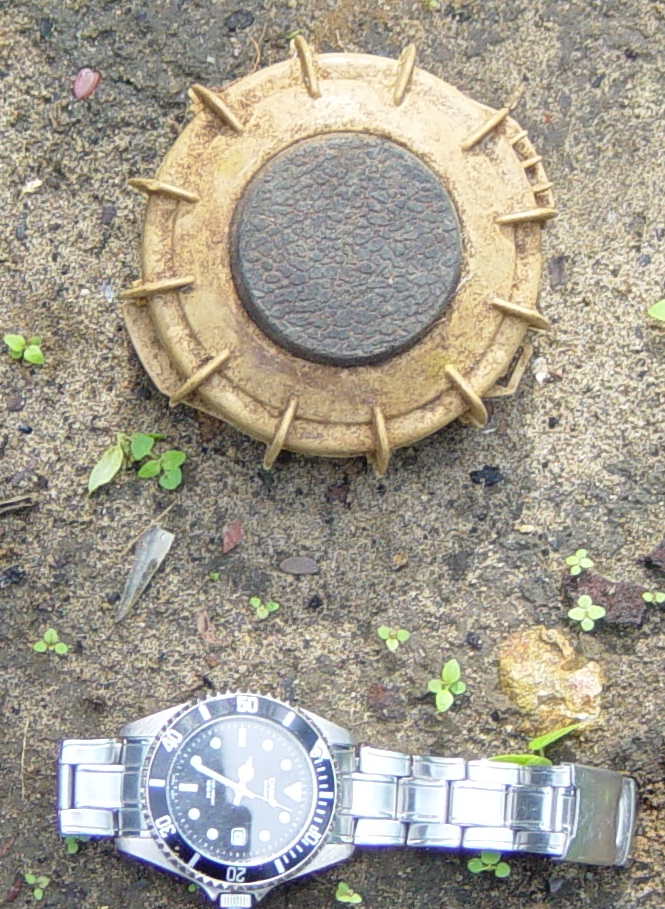
- A mine designed to explode in the presence, proximity or contact of a person and to incapacitate, injure or kill people.
- Explosive remnants of war:
- Unexploded or abandoned explosive ordnance remaining after armed conflict.
- Treaty:
- An international agreement governed by international law that creates obligations for its parties.
Mine Ban Treaty and landmine casualties: why it matters for exams
Exams: UPSC
Syllabus: International Relations: International treaties and disarmament; Security: Landmines and civilian protection
Common mistake: Examiners may present the four-year stockpile destruction deadline as the mine clearance deadline; clearance in areas under a state's control is required within 10 years.
Mains practice questions
Question 1(GS-2 | 250 words | 15 marks)
Despite its success in reducing the use of antipersonnel mines, the Mine Ban Treaty faces growing challenges including first-ever withdrawals and rising casualties from landmines and explosive remnants of war. Critically examine the limitations of the Mine Ban Treaty as an instrument of international humanitarian law and suggest measures to strengthen its effectiveness.
Answer outline
- Introduction: Open by noting that 162 countries are bound by the treaty, yet 2025 saw landmine and ERW casualties at a five-year high and the treaty faces its first withdrawals, exposing gaps between legal commitment and ground reality.
- Body:
- Describe the treaty's core obligations: prohibition on use, stockpiling, production and transfer, stockpile destruction within four years and mine clearance within ten years.
- Examine structural limitations: 35 states remain outside the treaty, and non-signatories and withdrawing states are not bound by its norms.
- Highlight the problem of explosive remnants of war, which the treaty's framework addresses unevenly and which continue to cause civilian casualties long after conflicts end.
- Discuss enforcement weakness: the treaty relies on voluntary compliance, transparency reporting and peer pressure rather than binding sanctions.
- Note the role of the ICBL and civil society in agenda-setting and monitoring, and how their reports sustain pressure on states.
- Conclusion: Conclude that the treaty remains a strong normative achievement, but its effectiveness depends on universalisation, adequate clearance funding and stronger accountability mechanisms, balancing humanitarian goals with the security concerns of states.
Question 2(GS-2 | 150 words | 10 marks)
Discuss how the rising landmine and explosive remnants of war casualties highlight the broader humanitarian costs of armed conflict, and evaluate the role of non-state actors such as the International Campaign to Ban Landmines in shaping global disarmament norms.
Answer outline
- Introduction: Open with the 2025 finding that casualties were the highest since 2020, showing that the humanitarian impact of weapons outlasts the conflicts that produce them.
- Body:
- Explain the long-term humanitarian costs: civilian deaths and injuries, displacement, obstruction of land use and reconstruction, and burdens on health systems.
- Evaluate the ICBL's role in agenda-setting, drafting pressure, and the 1997 Nobel Peace Prize recognition that boosted the treaty's legitimacy.
- Assess the limits of non-state advocacy, which depends on state cooperation for implementation and cannot compel non-signatories.
- Conclusion: Conclude that civil society campaigns are vital for norm creation and monitoring, while durable humanitarian outcomes require state commitment and sustained international cooperation.
Stuck? Get it in one tap
The Mine Ban Treaty prohibits antipersonnel mines and requires countries joining it to destroy stockpiles and clear mines within set periods. Explosive remnants of war are unexploded or abandoned ordnance that can still cause casualties. Landmine and explosive-remnant casualties were higher in 2025 than in any year since 2020.
- International Relations: International treaties and disarmament
- Security: Landmines and civilian protection
Related concepts: Antipersonnel mine, Explosive remnants of war, Treaty
Practice questions
Pick an answer, then read the explanation.
- Q1Easy
What is the full name of ICBL, the organisation that received the 1997 Nobel Peace Prize for its landmine ban campaign?
Explanation: ICBL stands for International Campaign to Ban Landmines. The campaign received the Nobel Peace Prize in 1997; the other expansions do not name the organisation.
- Q2Hard
Consider the following statements about the Mine Ban Treaty:
- 1. It entered into force on 1 March 1999.
- 2. It prohibits the production and transfer of antipersonnel mines.
- 3. It requires stockpile destruction within 10 years and mine clearance within four years.
Which of the statements given above are correct?
Explanation: Statements 1 and 2 are correct: the treaty entered into force in 1999 and prohibits both production and transfer. Statement 3 reverses the deadlines: stockpiles must be destroyed within four years and mines cleared from controlled areas within 10 years.
- Q3Medium
How many countries were bound by the Mine Ban Treaty when the 28th Landmine Monitor report was released in November 2026?
Explanation: A total of 162 countries were bound by the Mine Ban Treaty, while 35 remained outside it. The other figures do not represent the treaty's stated membership.
- Q4Medium
Which action would fulfil a Mine Ban Treaty obligation concerning antipersonnel mines?
Explanation: Treaty parties must destroy their antipersonnel mine stockpiles within four years. Transfer and production are prohibited, and retention beyond the destruction deadline conflicts with that obligation.
Frequently asked questions
1. What does the Mine Ban Treaty prohibit?
The treaty prohibits the use, stockpiling, production and transfer of antipersonnel mines.
2. When did the Mine Ban Treaty enter into force?
The treaty entered into force on 1 March 1999.
3. What are the Mine Ban Treaty deadlines for stockpiles and clearance?
States joining the treaty must destroy stockpiles within four years and clear mines in areas they control within 10 years.
4. Who released the 28th Landmine Monitor report?
The International Campaign to Ban Landmines released it on 24 November 2026.
All sources
 Original25 November 2026 · Read story



