

The 1950 India-Nepal Treaty of Peace and Friendship is the legal base of India-Nepal ties. It was signed when Nepal was still a kingdom under Rana rule, and it was meant to recognise the ancient ties between the two countries and to keep the peace between them.
The treaty gives the two governments a framework for mutual respect of sovereignty and territorial integrity, and for reciprocal rights for each other's nationals in residence, property, trade and movement.
The treaty is in news in 2026 because Nepal has long sought to revise it. The Eminent Persons Group (EPG) report suggested important changes to it, but New Delhi has said the report is 'not relevant', and the two sides agreed in general terms to review all bilateral treaties.The Hindu
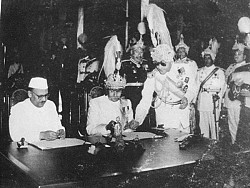
Key facts
| Date of signature | 31 July 1950, at Kathmandu; in force the same day under Article 9 |
|---|---|
| Signatories | Mohan Shamsher Jang Bahadur Rana, Prime Minister of Nepal, and Chandreshwar Prasad Narayan Singh, Indian Ambassador to Nepal |
| Ministry (India) | Ministry of External Affairs; listed in the Indian Treaties Database as a bilateral treatymea.gov.in |
| Structure | Ten articles; in force until either party ends it with one year's notice (Article 10) |
| Core principle | Everlasting peace and friendship; mutual respect for sovereignty, territorial integrity and independence (Article 1) |
| Movement and property | Reciprocal rights in residence, property, trade and movement for nationals of each country (Articles 6 and 7) |
Key features and how it works
- Article 1 commits both governments to everlasting peace and friendship and to respect each other's sovereignty, territorial integrity and independence.
- Article 5 lets Nepal import arms, ammunition and warlike material needed for its security from or through Indian territory, with the procedure to be worked out by consultation.
- Articles 6 and 7 give each country's nationals national treatment in economic development and reciprocal privileges in residence, property ownership, trade and commerce, and movement. Property ownership requires RBI permission.
- Articles 3 and 4 provide for diplomatic relations through representatives and for consular posts, with reciprocal privileges and immunities.
- Article 2 obliges each government to inform the other of any serious friction or misunderstanding with a neighbouring state that could affect their friendly relations.
- Article 8 cancels earlier treaties made on India's behalf between the British Government and Nepal, so far as the matters in this treaty are concerned.
Static GK
- Treaty of Trade and Commerce (India-Nepal): ratified in October 1950, a separate agreement that let Nepal import and export through Indian territory and ports, with no customs duty on goods in transit through India.
- Citizenship Act of 1952 (Nepal): allowed Indians to immigrate to Nepal and acquire Nepalese citizenship easily; the provision caused resentment in Nepal and remained until restrictive clauses were added in 1962.
- Roti-Beti ka Rishta: the phrase often used to describe the India-Nepal relationship.
- Treaty of Sugauli: the earlier (1816) treaty with the British, often cited in disputes over Kalapani and Lipulekh; it is not an Indo-Nepal treaty of 1950.
Achievements
- The treaty has supported an open border that lets Indian and Nepalese citizens cross without passports or visas and live, work and trade in either country.
- India's 2026 development package of ₹15,000 crore and offers of port access in Gujarat and Odisha show the treaty's relationship being used for new cooperation.The Hindu
Challenges
- Nepal wants the 1950 treaty updated, while India says the EPG report on changes is 'not relevant', which is a live difference between the two sides.The Hindu
- Boundary disputes such as Kalapani and Lipulekh remain unresolved, and the treaty does not settle them directly.
Way forward
- Structured dialogue on all outstanding matters, including the review of bilateral treaties that both sides agreed to in the joint statement.The Hindu
- Handholding of Nepal's trade and transit needs through port access and transit arrangements, so that the land-locked country depends less on a single route.
- Public and transparent handling of differences, so that disputes do not come up again in the form of trade pressure or public rhetoric.
Timeline
24 November 2026
Nepal PM Balendra Shah's first state visit to India yields a ₹15,000 crore development package and port access offers in Gujarat and Odisha, while the two sides agree to review all bilateral treaties; New Delhi calls the EPG report on the 1950 treaty 'not relevant'.
Read the story23 September 2015
Segments of Nepal's Madheshi population began a blockade at the Indian border in protest against constitutional changes.
23 March 1989
The trade and transit treaties expired, leading to a virtual Indian economic blockade of Nepal that lasted until April 1990.
1962
Restrictive clauses were added to Nepal's constitution on citizenship for Indians.
1952
Nepal's Citizenship Act of 1952 let Indians acquire Nepalese citizenship easily.
October 1950
The Treaty of Trade and Commerce was ratified, allowing Nepal transit rights through Indian territory and ports.
31 July 1950
The Treaty of Peace and Friendship was signed at Kathmandu and came into force the same day.
1860
Nepal's Prime Minister Jung Bahadur Rana allowed Indians to buy and sell land in Nepal's Terai after a treaty with the East India Company.
Every new story on this subject is added here automatically.
Frequently asked questions
When was the India-Nepal Treaty of Peace and Friendship signed?
The treaty was signed at Kathmandu on 31 July 1950 and came into force the same day under Article 9.
How can the treaty be ended?
Either party can end the treaty by giving one year's notice, under Article 10.
Do Indian and Nepalese citizens need a passport or visa to cross the border?
No. Indian and Nepalese citizens can cross the border without a passport or visa and can live and work in either country.
Has the 1950 treaty been revised?
The 2026 joint statement says both sides will review all bilateral treaties. India has said the EPG report proposing changes to the 1950 treaty is 'not relevant'.The Hindu
GS paper mapping
- GS-2India and its neighbourhood: bilateral relations and treaties with Nepal
- GS-2Role of external powers and regional groupings in the neighbourhood
- GS-1Modern Indian history: the Rana regime and the transition to a democratic Nepal
Sources
Every fact on this page was checked against these pages.
