

Source: Dainik Bhaskar
Subject: Health: Universal immunisation and cervical cancer prevention; Governance and Social Justice|Target exams: RPSC RAS, RSSB
Key points for Prelims: Human papillomavirus (HPV), HPV vaccination campaign, Universal Immunisation Programme, Cervical cancer prevention, Medical and Health Department, Rajasthan
Mains syllabus mapping
- General Studies Paper 2: Health: Government policies and interventions for health; universal immunisation and public health outreach
- General Studies Paper 2: Centre-State relations: role of states in implementing national health schemes; district-level disparities
Key facts for one-day exams
- Rajasthan vaccinated 621,613 girls under the HPV campaign.
- Rajasthan ranked 11th nationally in the campaign.
- The national campaign began in Ajmer in February 2026.
- The campaign targets 14-year-old girls.
- Barmer recorded 59.02% vaccination coverage.
Rajasthan HPV vaccination campaign: why in the news?
Rajasthan’s nine-month HPV vaccination data shows 85.86% target achievement and a rise in national ranking, highlighting the impact of field-level awareness efforts and persistent district-level gaps.
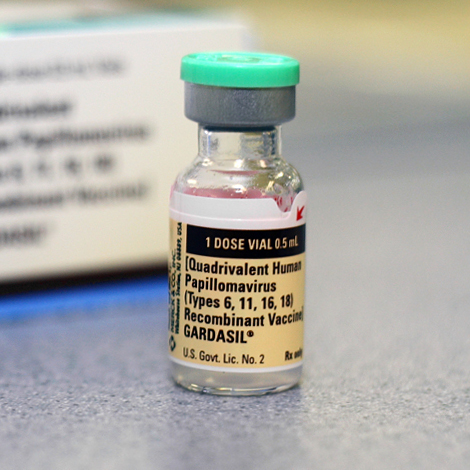
Rajasthan has vaccinated 621,613 girls against the human papillomavirus (HPV) in nine months, achieving 85.86% of its target of 724,000 girls aged 14 years. The state’s national ranking improved from 17th in October to 11th, according to the Medical and Health Department. The free, voluntary campaign, launched by Prime Minister Narendra Modi from Ajmer in February 2026, provides one dose with parental consent.
Health officials attributed the acceleration to field teams visiting households to explain the vaccine and cervical cancer prevention to parents. Director (Public Health) Dr Ravi Prakash Sharma and Project Director (Immunisation) Dr Raghuraj Singh said the outreach boosted the campaign. District coverage varied widely: Udaipur-2 recorded 100.76%, Deeg 100.47% and Salumber 100.41%, while Barmer lagged at 59.02%. Nationally, Bihar achieved 89.71% coverage, Chhattisgarh 86.53%, and Uttar Pradesh, Andhra Pradesh and Madhya Pradesh reported 140.17%, 120.63% and 102.51% respectively against their targets.
Key features and how it works
- Vaccine is given free at government health facilities that have a functional Cold Chain Point, a medical officer for AEFI management, and internet connectivity. Sessions usually run 9:00 AM to 2:00 PM and may be held on weekends and public holidays.PIB
- Girls may self-register on U-WIN, be pre-registered by a health worker, or walk in for on-site registration. The left index finger is marked after vaccination during the three-month campaign.PIB
- Each site is linked to the nearest 24x7 government health facility for immediate medical support.PIB
- The vaccine is procured through a transparent mechanism in partnership with GAVI, the Vaccine Alliance. GAVI provided US$250 million under a three-year partnership (February 2023) that also covered introducing HPV and Typhoid Conjugate Vaccine into routine immunisation.PIB
- After the campaign, the vaccine stays available on routine immunisation days.PIB
Eligibility and key provisions
- Eligible: girls aged 14, and girls who turn 15 within 90 days of the launch, under the intensive campaign.PIB
- Excluded: girls with moderate or severe illness until full recovery, known yeast allergy or prior allergic reaction to any vaccine, pregnant girls, and girls previously vaccinated with any HPV vaccine. The target is girls aged 14, with girls who turn 15 within 90 days of launch also eligible under the intensive campaign.PIB
Related Static GK and comparison
- U-WIN: the digital platform used for HPV vaccine registration in this programme.PIB
- eVIN manages and monitors all vaccine stocks and logistics for the programme.PIB
- GAVI, the Vaccine Alliance, is a public-private partnership of governments, WHO, UNICEF, the World Bank, the vaccine industry, civil society and the Gates Foundation. HPV vaccine procurement is undertaken in partnership with GAVI.PIB
- Cervical Cancer Elimination Day of Action: 17 November; it marks the day in 2020 when WHO launched the global strategy to accelerate elimination of cervical cancer as a public health problem.
- WHO target: 90% of girls fully vaccinated with HPV vaccine by age 15.
Achievements
- India launched what PIB describes as a free nationwide HPV vaccination programme for about 1.15 crore girls, joining over 160 countries that have HPV vaccination in national immunisation schedules.PIB
- Nationwide coverage reached 79.51% as of 14 October 2026, with 91.82 lakh girls vaccinated and 146 adverse events following immunisation reported across the country.
- Gujarat, Uttar Pradesh, Andhra Pradesh, Madhya Pradesh and Mizoram had covered 100% of their targets.
Challenges
- Misinformation, including online claims linking the HPV vaccine to infertility, has created hesitancy among parents.
- Coverage varies widely between states and districts: Maharashtra stood at 9% and Mumbai at 2%, while Wardha reached 25%. Such regional gaps weaken equal protection.
- Sessions with low turnout can waste effort; Maharashtra held more than 2.14 lakh sessions but vaccinated only 86,855 girls, which shows that sessions alone do not drive uptake.
Way forward
- Outcome monitoring by district through U-WIN, so that low-coverage districts are identified and supported early.
- Community awareness and handholding through health workers to counter misinformation and encourage parents to bring their daughters.
- Convergence with schools and existing immunisation days so that eligible girls are reached without relying only on health facility visits.
Connected to this news
Human Papillomavirus (HPV) Vaccination Programme, India
A free national HPV vaccination programme launched on 28 February 2026 to prevent cervical cancer, targeting about 1.15 crore girls aged 14 through government health facilities.
Timeline
23 November 2026This story
Rajasthan reports 621,613 girls vaccinated against HPV in nine months, 85.86% of its target, and rises to 11th nationally; Barmer lags at 59.02%.
17 November 2026
State figures show Maharashtra at 9% and Mumbai at 2% of HPV vaccine targets as of 15 November 2026, ranking Maharashtra 32nd of 36 states and UTs; national coverage stood at 79.51% as of 14 October 2026.
Read the story28 February 2026
PM Narendra Modi launched the nationwide HPV vaccination programme at Ajmer, Rajasthan; States and UTs held simultaneous launch events.
February 2023
GAVI and the Government of India established a three-year partnership with US$250 million funding, including introduction of HPV vaccine into the national schedule.
2006
HPV vaccines first became available globally.
HPV vaccination target achievement
| State | Achievement |
|---|---|
| Rajasthan | 85.86% |
| Bihar | 89.71% |
| Chhattisgarh | 86.53% |
| Uttar Pradesh | 140.17% |
| Andhra Pradesh | 120.63% |
| Madhya Pradesh | 102.51% |
Rajasthan connection
Key terms
- Human papillomavirus:
- Human papillomavirus is a group of viruses; persistent infection with certain types can cause cervical cancer.
- Cervical cancer:
- Cervical cancer is cancer arising in the cervix, the lower part of the uterus.
- Vaccination coverage:
- Vaccination coverage measures the vaccinated population against a specified target population, usually as a percentage.
Rajasthan HPV vaccination campaign: why it matters for exams
Exams: RPSC RAS, RSSB
Syllabus: Society: Health and women; Science and Technology: Vaccines and disease prevention
Common mistake: Examiners may present the HPV campaign as compulsory or requiring multiple doses; the described campaign is voluntary and provides one dose with parental consent.
Mains practice questions
Question 1(GS-2 | 250 words | 15 marks)
Rajasthan's HPV vaccination drive has reached 85.86% of its target in nine months, yet coverage ranges from over 100% in some districts to 59.02% in Barmer. Critically examine the factors behind such district-level disparities in universal immunisation campaigns and suggest measures to address them.
Answer outline
- Introduction: Open by noting that the state's campaign reached 85.86% of its target, with some districts overshooting and Barmer lagging at 59.02%, showing that aggregate success can hide local gaps.
- Body:
- Explain how field-level household outreach to parents on the vaccine's benefits and cervical cancer prevention drove the acceleration in coverage.
- Discuss reasons for district variation: target-setting and population estimates, access to health facilities and vaccinators, parental consent barriers, awareness and social norms, and the workload of field staff.
- Highlight the role of data quality, since coverage above 100% in some districts may indicate target mismatches or reporting errors that distort the picture.
- Examine the significance of the voluntary, parental-consent model for a sensitive vaccine and how it shapes uptake in conservative areas.
- Suggest measures: micro-planning with updated beneficiary lists, targeted outreach in low-performing blocks, community health workers and school or Anganwadi linkages, and real-time monitoring dashboards.
- Conclusion: Balance the state's achievement against its unevenness, and argue that sustaining national immunisation goals requires district-specific strategies alongside celebration of headline figures.
Question 2(GS-2 | 150 words | 10 marks)
Discuss how the success of the HPV vaccination campaign in Rajasthan and other states illustrates the role of grassroots health workers and awareness campaigns in achieving public health goals in India.
Answer outline
- Introduction: Open by linking Rajasthan's climb from 17th to 11th nationally to the field teams who explained the vaccine to households.
- Body:
- Describe how household visits and parental counselling addressed hesitancy around a new vaccine for girls.
- Discuss the role of frontline workers and health officials, such as the Director (Public Health) and Project Director (Immunisation), in coordinating the campaign.
- Note how state-level performance varies nationally, with Bihar, Chhattisgarh and others reporting strong coverage, showing that local delivery matters.
- Mention the need for sustained trust-building and follow-up so that awareness translates into completed vaccination.
- Conclusion: Conclude that grassroots engagement, supported by data and committed administration, is central to meeting India's immunisation and cancer-prevention goals.
Stuck? Get it in one tap
HPV is a group of viruses, some types of which can cause cervical cancer. The vaccination campaign offers eligible 14-year-old girls one free dose to help protect them. Vaccination is voluntary and requires parental consent.
- Society: Health and women
- Science and Technology: Vaccines and disease prevention
Related concepts: Human papillomavirus, Cervical cancer, Vaccination coverage
Practice questions
Pick an answer, then read the explanation.
- Q1Easy
Which department's health teams conducted household outreach for the HPV vaccination campaign in Rajasthan?
Explanation: The Medical and Health Department's teams informed parents about HPV vaccination and cervical cancer prevention. The other departments serve agriculture, forestry and tourism rather than this vaccination campaign.
- Q2Hard
Consider the following statements about the HPV vaccination campaign in Rajasthan:
- 1. The campaign targets 14-year-old girls.
- 2. Vaccination is compulsory without parental consent.
- 3. One vaccine dose is provided under the campaign.
Which of the statements given above is/are correct?
Explanation: Statements 1 and 3 are correct: the campaign targets 14-year-old girls and provides one dose. Statement 2 is incorrect because vaccination is voluntary and requires parental consent.
- Q3Medium
What percentage of its HPV vaccination target had Rajasthan achieved in nine months in 2026?
Explanation: Rajasthan's recorded achievement was 85.86%. Chhattisgarh recorded 86.53%, Bihar 89.71%, and Rajasthan's Udaipur-2 recorded 100.76%.
- Q4Medium
Why are Rajasthan health teams visiting parents at home during the HPV vaccination campaign?
Explanation: Household visits help parents understand HPV vaccination and cervical cancer prevention. The campaign is preventive and voluntary, targets 14-year-old girls, and requires parental consent.
Frequently asked questions
1. How many girls received the HPV vaccine in Rajasthan?
A total of 621,613 girls received the vaccine against a target of 724,000.
2. What is the age requirement for the HPV vaccination campaign?
The campaign targets girls aged 14 years. It provides one free dose with parental consent.
3. Where was the national HPV vaccination campaign launched?
The campaign was launched from Ajmer, Rajasthan, in February 2026.
4. Which Rajasthan district recorded the lowest HPV vaccination coverage?
Barmer recorded the lowest coverage at 59.02%.
All sources
- Original23 November 2026 · Read story
- Merged23 November 2026 · Read story



