

Source: PIB
Subject: Indian Polity and Governance; Data Protection, Statistics and Digital Governance|Target exams: UPSC
Key points for Prelims: Digital Personal Data Protection Act, 2023, Data Security Council of India (DSCI), Ministry of Statistics and Programme Implementation (MoSPI), Privacy-enhancing technologies, National Statistical System, Nasscom
Mains syllabus mapping
- General Studies Paper 2: Governance; Transparency and accountability; Government policies and interventions for development in sectors; Issues relating to data privacy and institutional mechanisms
- General Studies Paper 3: Science and Technology, developments and applications in AI and cyber security; Data governance

Key facts for one-day exams
- MoSPI and DSCI signed an MoU on 25 November 2026.
- The MoU concerns trusted data sharing for official statistics.
- Nasscom established the Data Security Council of India.
- The partnership's first planned output is a joint policy paper.
- The related data-protection law is the Digital Personal Data Protection Act, 2023.
MoSPI-DSCI MoU on trusted data sharing: why in the news?
MoSPI and DSCI signed an MoU on 25 November 2026 to develop trusted data-sharing protocols for official statistics, a step that gains urgency as the Digital Personal Data Protection Act, 2023 is set to take effect in 2027.
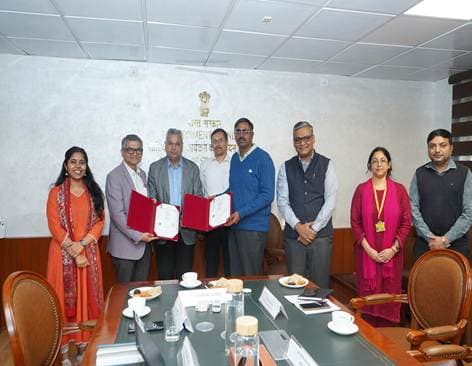
The Ministry of Statistics and Programme Implementation (MoSPI) and the Data Security Council of India (DSCI), a not-for-profit body set up by Nasscom, signed a Memorandum of Understanding in New Delhi on 25 November 2026. The MoU is part of MoSPI’s efforts to strengthen the National Statistical System through collaboration with public and private sector institutions. Dr Saurabh Garg, Secretary of MoSPI, and Vinayak Godse, Chief Executive Officer of DSCI, were present at the signing.
Statistical agencies now use data from both traditional and alternative sources, some of which contain personal identifiers. The Digital Personal Data Protection Act, 2023 is scheduled to come into force in 2027, and the MoU is intended to help data-producing agencies review how they handle such data while maintaining privacy and confidentiality. As a first step, MoSPI and DSCI will jointly prepare a policy paper on trusted data flows and data management, drawing on international good practices in data protection and cybersecurity.
The collaboration also covers joint research on data governance and technical support for the adoption of privacy-enhancing technologies and the responsible use of artificial intelligence. The MoU provides for facilitation of pilot projects with industry, academia, research institutions and international organisations.
Key features and how it works
- Coverage and quality of official statistics: statistics are based on administrative sources, surveys and censuses by the Centre and States, and on non-official sources and studies.
- The Programme Implementation wing monitors infrastructure and projects through the Infrastructure and Project Monitoring Division (IPMD), and runs the Member of Parliament Local Area Development Scheme (MPLADS).
- Under the MoU, MoSPI and DSCI will first prepare a joint policy paper on trusted data flows and data management. The collaboration also covers joint research on data governance, privacy-enhancing technologies, responsible use of AI, and pilot projects with industry, academia, research institutions and international organisations.PIB
Related Static GK and comparison
- National Statistical Commission: formed on 12 July 2006 under the recommendation of the Rangarajan Commission. Its objective is to ease data collection problems faced by statistical agencies. Dr Saurabh Garg is its Secretary.
- Indian Statistical Institute: an autonomous institute declared an Institute of National Importance under the Indian Statistical Institute Act, 1959. It is headquartered in Kolkata and functions under MoSPI. MoSPI is its nodal ministry.
- Data Security Council of India (DSCI): its operational office is at the NASSCOM Campus, Sector 126, Noida.dsci.in
- NASSCOM: an Indian non-governmental trade association and advocacy group for the technology industry, founded in 1988 and operating as a nonprofit.
Achievements
- The MoU with DSCI extends its work to public-private collaboration on data protection and cyber security for official statistics.PIB
- The ministry plans joint research on privacy-enhancing technologies and responsible AI use, which can strengthen the national statistical ecosystem.
Challenges
- Statistical agencies now use alternative data sources that carry personal identifiers, which raises privacy and confidentiality risks.PIB
- Data-producing agencies must review how they handle personal data before the DPDP Act comes into force, so compliance work is needed across agencies.PIB
- Sharing data across agencies must keep data quality and statistical confidentiality intact, which is hard when data flows widen.
Way forward
- Finish the joint policy paper on trusted data flows and data management, drawing on international good practice in data protection and cybersecurity.PIB
- Facilitate pilot projects with industry, academia, research institutions and international organisations.PIB
- Build common data-governance standards across the National Statistical System so that agencies share data under the same privacy rules.
Connected to this news
Ministry of Statistics and Programme Implementation
MoSPI is the Government of India ministry that leads the country's official statistics and monitors government programmes, and it works with bodies such as DSCI to build trusted data-sharing practices.
Timeline
25 November 2026This story
MoSPI and DSCI signed an MoU to build trusted data-sharing protocols and privacy safeguards for official statistics, ahead of the DPDP Act 2023 taking effect in 2027.
13 November 2025
Provisions on the establishment of the Data Protection Board of India come into force.
11 August 2023
The President gives assent to the Digital Personal Data Protection Act, 2023.
12 July 2006
The National Statistical Commission is formed under the Rangarajan Commission's recommendation.
15 October 1999
MoSPI comes into existence as an independent ministry after the Department of Statistics and the Department of Programme Implementation merge.
1959
The Indian Statistical Institute Act, 1959 is passed, declaring ISI an institute of national importance.
Key terms
- Official statistics:
- Statistics produced by public authorities to describe economic, social, demographic or environmental conditions.
- Statistical confidentiality:
- Protection of information collected for statistical purposes against disclosure that could identify a data subject.
- Personal data:
- Data relating to an individual who is identifiable by or in relation to such data.
- Privacy-enhancing technologies:
- Technical methods designed to reduce privacy risks when data is processed or shared.
MoSPI-DSCI MoU on trusted data sharing: why it matters for exams
Exams: UPSC
Syllabus: Governance: Data protection and public administration; Science and Technology: Artificial intelligence and cybersecurity
Common mistake: Examiners may present the joint policy paper as an already implemented data-sharing protocol; MoSPI and DSCI will first prepare the paper.
Mains practice questions
Question 1(GS-2 | 250 words | 15 marks)
The MoSPI-DSCI MoU on trusted data sharing seeks to reconcile the use of official statistics with individual privacy as the Digital Personal Data Protection Act, 2023 comes into force. Critically examine the challenges in ensuring privacy and confidentiality in official statistics, and suggest measures for building trust in the National Statistical System.
Answer outline
- Introduction: Open by noting that official statistics depend on public trust, and that the MoSPI-DSCI MoU signed on 25 November 2026 responds to the coming into force of the DPDP Act, 2023 in 2027.
- Body:
- Statistical agencies now draw on traditional and alternative data sources, some carrying personal identifiers, which raises re-identification and consent risks.
- Tension between the statistical need for granular data and the privacy principles of purpose limitation and data minimisation in the DPDP Act, 2023.
- Institutional gaps: uneven data handling capacity across data-producing agencies and the need for clear protocols for trusted data flows.
- Role of privacy-enhancing technologies, cybersecurity standards and international good practices, as the MoU proposes through a joint policy paper.
- Need for accountability, public communication and collaboration among government, industry, academia and research bodies through pilot projects.
- Conclusion: Trust in official statistics will rest on a balanced framework that protects personal data while preserving statistical utility, with the MoU's policy paper serving as a starting point for institutionalised safeguards.
Question 2(GS-3 | 150 words | 10 marks)
Discuss the role of public-private collaboration, such as the partnership between MoSPI and the Data Security Council of India, in strengthening data governance and the responsible use of artificial intelligence in government.
Answer outline
- Introduction: Introduce the MoSPI-DSCI partnership as an example of government engaging an industry-led, not-for-profit body to build data governance capacity.
- Body:
- Benefits: access to cybersecurity expertise, technical support for privacy-enhancing technologies and joint research on data governance.
- Support for responsible AI use in official statistics through pilot projects with industry, academia and research institutions.
- Concerns: possible conflicts of interest, need for transparency and clear standards so that private participation does not weaken public accountability.
- Conclusion: Well-structured public-private collaboration can strengthen data governance, provided it operates under transparent rules and firm regulatory oversight.
Stuck? Get it in one tap
Official statistics can use information that identifies individuals. MoSPI and DSCI will work on ways to share such data while protecting privacy. Their work will include a policy paper, research and support for privacy-enhancing technologies.
- Governance: Data protection and public administration
- Science and Technology: Artificial intelligence and cybersecurity
Related concepts: Official statistics, Statistical confidentiality, Personal data, Privacy-enhancing technologies
Practice questions
Pick an answer, then read the explanation.
- Q1Hard
Consider the following statements about the MoSPI-DSCI data-sharing collaboration:
- 1. Its first planned output is a joint policy paper on trusted data flows and data management.
- 2. It covers technical support for privacy-enhancing technologies.
- 3. Its pilot projects are restricted to government agencies.
Which of the statements given above are correct?
Explanation: Statements 1 and 2 are correct: the policy paper and technical support are part of the collaboration. Statement 3 is incorrect: pilot projects may involve industry, academia, research institutions and international organisations.
- Q2Medium
In which year was the Digital Personal Data Protection Act enacted?
Explanation: The law is the Digital Personal Data Protection Act, 2023. The year 2027 is associated with its scheduled coming into force, rather than its enactment.
- Q3Medium
What is the principal purpose of the MoSPI-DSCI trusted data-sharing collaboration?
Explanation: The collaboration seeks trusted data flows while maintaining data quality and protecting confidentiality. It involves both traditional and alternative sources and facilitates cooperation with several sectors rather than transferring responsibility for official statistics.
Frequently asked questions
1. What is the purpose of the MoSPI-DSCI MoU?
The MoU aims to support trusted data sharing for official statistics while protecting privacy and statistical confidentiality.
2. What will MoSPI and DSCI prepare first under their collaboration?
They will jointly prepare a policy paper on trusted data flows and data management.
3. Who established the Data Security Council of India?
Nasscom established the Data Security Council of India.
4. Does the MoSPI-DSCI MoU cover artificial intelligence?
Yes. It covers technical support for responsible use of artificial intelligence and privacy-enhancing technologies.
All sources
- Original25 November 2026 · Read story


